
When a brand chooses a manufacturing partner for baby products, one question matters most: Is it safe?
Parents trust you to deliver products that won't harm their children. And that trust starts with certified materials.
For textiles, one certification stands above the rest: OEKO-TEX® Standard 100 Class I.
OEKO-TEX Standard 100 is an independent certification system for textiles tested for harmful substances. Established in 1992, it sets uniform testing criteria for substances that could be harmful to human health.
There are four product classes. Class I is the strictest — reserved for products for babies and toddlers up to age 3.
When you see the OEKO-TEX Class I label on a product, it means every component — fabric, thread, zipper, label — has been tested and certified free from harmful levels of over 300 substances, including:
Products like baby sleeping bags, swaddles, and bodysuits have direct, prolonged contact with a baby's skin. Babies also explore by putting things in their mouths.
For these products, the OEKO-TEX Class I limits are significantly stricter than for adult clothing — because babies' developing bodies are more vulnerable.
| Product Type | Why OEKO-TEX Class I Matters |
| Baby Sleeping Bags | Worn for hours during sleep; constant skin contact |
| Swaddles | Wrapped around the entire body; fabric against face |
| Baby Bodysuits | Worn all day; sensitive areas covered |
| Certification | Focus | Best For |
| OEKO-TEX Standard 100 | Harmful substances in finished product | All baby textiles |
| GOTS | Organic fibers + social criteria | Organic cotton products |
| BSCI | Social compliance | Factory working conditions |
| ISO 9001 | Quality management systems | Manufacturing processes |
For baby products, OEKO-TEX Class I is the baseline. Many brands also pursue GOTS if using organic materials, or BSCI to demonstrate social responsibility.
At Weifang Botai, all our baby textiles are manufactured with OEKO-TEX Standard 100 Class I certified materials — from the fabric to the thread.
What this means for your brand:
Our current certifications:
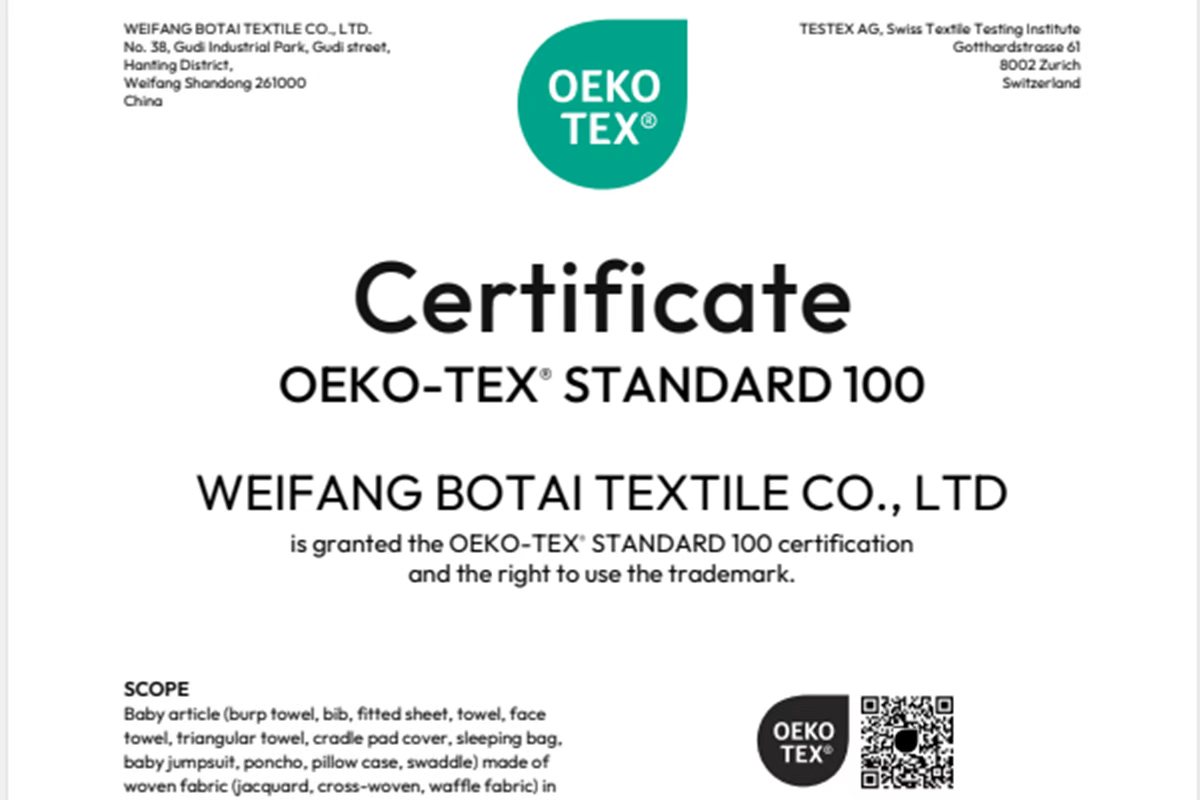
Q: How do I verify a manufacturer's OEKO-TEX certification?
A: Ask for the current certificate. It's issued annually and lists the specific products covered.
Q: Can I use the OEKO-TEX label on my products?
A: Yes, if you purchase certified materials from a certified manufacturer and follow OEKO-TEX labeling guidelines.
Q: Does OEKO-TEX cover the entire factory?
A: It certifies specific products and materials, not the entire factory. Ask which products are covered.
Q: Is OEKO-TEX the same as organic?
A: No. OEKO-TEX tests for harmful substances but doesn't require organic farming. GOTS covers both.
If you're developing:
Any other product for babies under 3
You need a manufacturing partner with OEKO-TEX Class I certified materials. It's not just about meeting regulations — it's about giving parents the peace of mind they deserve.

 EN
EN